Oral health & your heart
Gum disease and the inflammation behind it have been associated with heart and blood-vessel health.
What the research describes
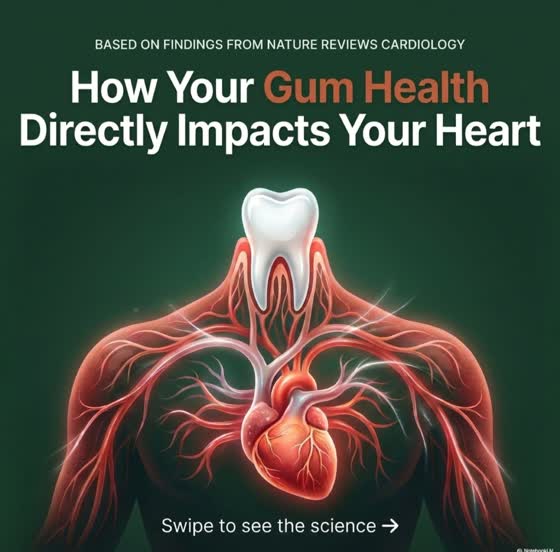
The American Heart Association has published a scientific statement examining periodontal disease and atherosclerotic vascular disease, and umbrella reviews continue to find a consistent association between the two. The proposed mechanism is inflammation: bleeding gum tissue gives bacteria direct access to the bloodstream, and chronic inflammation is part of how arterial plaque forms and destabilizes.
Why it matters for prevention
The American Heart Association updated its statement on this in December 2025, and it is worth quoting how carefully they put it: evidence for a cause-and-effect relationship, they write, "is elusive," and there is no direct evidence that periodontal therapy prevents cardiovascular disease. But the same statement says something more useful than a headline would: there is strong evidence that treating periodontal disease improves intermediate measures — blood pressure, HDL cholesterol, and inflammatory markers — which are themselves known to raise future cardiac risk. So the honest position is this: we cannot promise that treating your gums protects your heart. We can say that it lowers a measurable inflammatory burden your cardiologist already cares about.
How we look at it here
We screen for inflammatory bacteria with on-site microscope analysis and treat active gum disease rather than watching it. We also coordinate with your physician, because your gums are a data point in a bigger cardiovascular picture, not a separate universe.
By the numbers
Findings as reported in the studies linked below. Every figure was read from the source itself. Where a result is borderline or contested, we say so.
- RR 2.58 95% CI 2.20–3.03
- Higher risk of coronary heart disease with periodontitis, pooled across 57 studies. Romandini 2021, as tabulated in the 2025 AHA scientific statement
- RR 3.11 95% CI 2.42–3.98
- Higher risk of cerebrovascular disease. Same review, via the AHA statement
- RR 1.47 95% CI 1.14–1.90
- Higher cardiovascular mortality. Same review, via the AHA statement
- 1.22–4.42 range of odds ratios
- Across 41 systematic reviews, every one found an association — but the size of it varied widely, which is itself a caution. Arbildo-Vega 2024, umbrella review
The research
Peer-reviewed sources behind the associations described above. We link them so you can read the primary evidence yourself.
- Lockhart, P. B., et al. (2012). Periodontal disease and atherosclerotic vascular disease: a scientific statement from the American Heart Association. Circulation, 125(20), 2520–2544.
- Arbildo-Vega, H. I., et al. (2024). Periodontal disease and cardiovascular disease: umbrella review. BMC Oral Health, 24(1), 1308.
- Tran, A. H., et al. (2026). Periodontal Disease and Atherosclerotic Cardiovascular Disease: A Scientific Statement From the American Heart Association. Circulation, 153(6), e73–e88. (Published online December 16, 2025.)
- Tonelli, A., Lumngwena, E. N., & Ntusi, N. A. B. (2023). The oral microbiome in the pathophysiology of cardiovascular disease. Nature Reviews Cardiology, 20(6), 386–403.
See it explained: cardiovascular
Dr. Uddaraju and Dr. Bautista break down the oral-systemic connection on our feed, with new posts most weeks. Every one is built on peer-reviewed clinical research, and each links to the paper it came from, so you can read the primary source yourself.
Curious what your own mouth is telling us?
Your comprehensive first visit includes live microscope bacterial analysis, an airway look, and a full health-history conversation. About 90 minutes, no rush.
Educational information describing associations reported in scientific research. It is not a diagnosis, medical advice, or a promise of treatment outcomes. Always consult your physician about your medical care. Content pending clinical review by Dr. Uddaraju and Dr. Bautista.